All Areas
Any Day
Quality Pesticides
Neighbor-Friendly
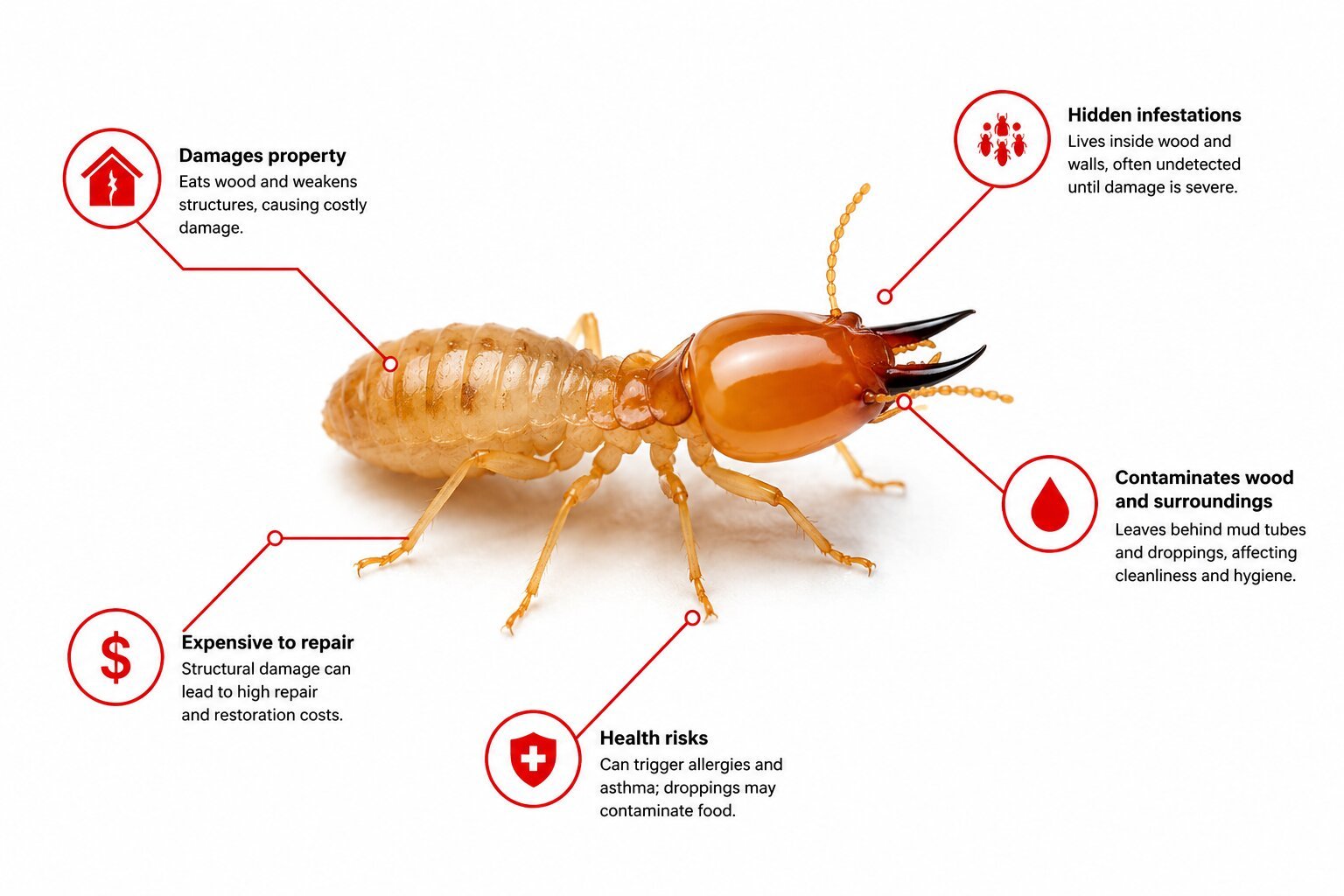
Termites usually enter from colonies in yards near foundations. Cracks, pipe gaps, wire openings, wet soil, and direct wood-to-ground contact can give them access into homes and business properties.
Wooden structures such as porches, decks, frames, and outdoor wooden parts in direct contact with the ground can create termite access.
Stacks of firewood or untreated timber placed near the wall of a house can attract termite activity close to the building.
Leaking faucets, gutters, downspouts, poor drainage, or irrigation near foundations can keep soil damp and increase termite risk.
Trees, shrubs, landscaping, and garden elements planted very close to the building can support hidden routes toward the structure.
Termites are called silent destroyers because they may secretly hide and live in a home or yard without immediate signs of damage. By the time visible damage appears, they may already have affected wood, frames, cabinets, or concealed areas.
All termites eat cellulose-based plant materials. Unfortunately, many homes and commercial properties contain cellulose food sources, including wood, paper-based materials, wooden fixtures, cabinets, framing, and stored materials.
Termites are eusocial insects. This means they live in a caste system where different castes have different roles, such as workers, soldiers, reproductive termites, queens, and kings.
Termite colonies spend time grooming one another to help prevent disease inside the colony. This hygiene behavior is one reason colonies can remain organized and active for long periods.
Termites use vibrations to communicate. When soldier termites sense danger, they may hit their heads against the tunnel walls, creating vibrations that warn the rest of the colony.
Termites have sense organs located on their antennae and tibiae. Scientists have observed that some species can choose food sources by sensing vibroacoustic signals emitted by different pieces of wood.
Common signs include mud tubes, hollow-sounding wood, bubbling paint, weak skirting, damaged door frames, stuck doors, fine dust-like material, or wooden areas that look soft, thin, or blistered.
All homes can provide some form of cellulose food for termites despite their construction type. Concrete, steel, or modern buildings can still include wooden fixtures, cabinets, stored materials, landscaping, or entry gaps that support activity.
Use vacuum bags where possible
Take your pets with you
Create 10–30 cm gaps
Turn off aeration and cover it
| Apartment | Price, AED |
|---|---|
| 1-bedroom apartment | 300 |
| 2-bedroom apartment | 550 |
| 3-bedroom apartment | 800 |
| 4-bedroom apartment | 1050 |
| 5-bedroom apartment | 1300 |
| 6-bedroom apartment | 1550 |
| Area | Price, AED |
|---|---|
| less than 30 sqm (300 sqft) | 100 |
| more than 30 sqm (300 sqft) | 100+3 AED for each additional 10 square meters |

The workflow is simple and documented. The processing stage takes up to 40 minutes in many standard cases, depending on property size, access, and treatment complexity.
After you fill out the request form, our manager contacts you to clarify the details.
Our specialists arrive strictly at the agreed time for the service visit.
The first technical step is to inspect the object, affected areas, and risk points.
Then we sign the service contract with you before treatment begins.
Our specialists start processing using the selected termite control method.
You receive guidance about re-entry, pets, aquarium precautions, and prevention.
First Station provides termite control in Dubai communities for villas, apartments, residential plots, warehouses, offices, restaurants, cafés, hotels, schools, clinics, yards, retail spaces, industrial facilities, and commercial properties.
This section is about how the service is managed: documentation, privacy, payment, product quality, and customer confidence.
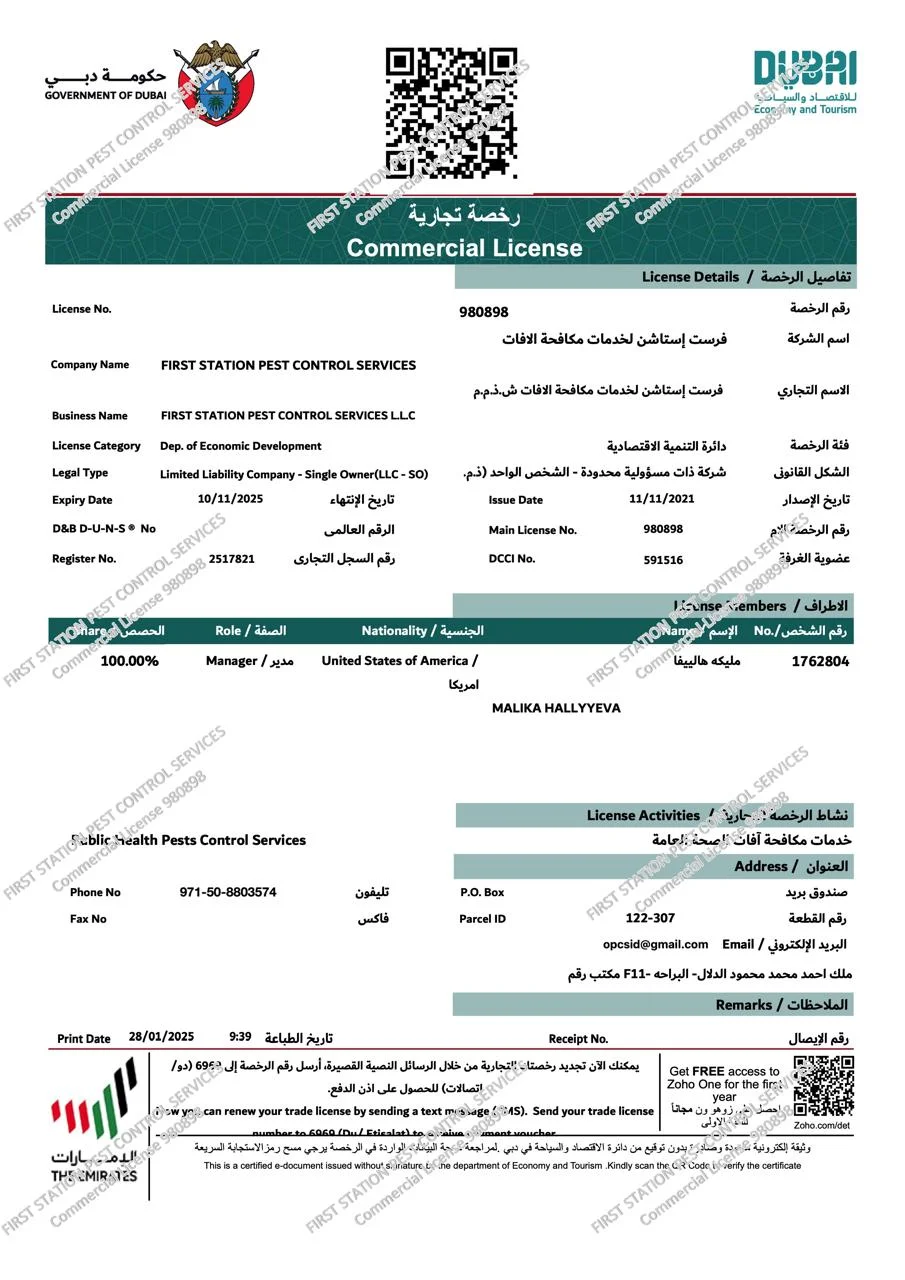
We operate with a professional license in Dubai and Municipality approval, giving customers confidence before the treatment starts.
Our team respects privacy. The visit is handled professionally so neighbors do not need to worry about your pest control service.
Customers can pay by card or cash, and business clients can request a service contract when regular pest control is needed.
You may need termite control if you notice mud tubes, hollow-sounding wood, damaged skirting, weak door frames, bubbling paint, stuck doors, fine dust-like material, or soft wooden areas.
Termites may return when soil access, moisture, untreated wood, cracks, or the movement route remains active. This is why inspection, route tracing, and prevention advice are important.
No. Termites can affect door frames, skirting boards, cabinets, wardrobes, wooden partitions, flooring edges, storage areas, warehouses, gardens, foundation edges, and soil-contact points.
Yes. First Station supports villas, apartments, offices, warehouses, retail shops, restaurants, hotels, clinics, schools, staff accommodation, and property managers with termite control in Dubai.
This depends on the treatment method, product used, soil access, drilling requirement, and property condition. Our team will explain preparation and safety guidance before treatment.
Preparation may include clearing access to affected wooden areas, moving stored items, identifying moisture problems, showing visible damage, and allowing inspection around walls, skirting, and soil-contact points.
Results can vary depending on infestation level, termite route, property structure, soil condition, moisture, and untreated wood. Some cases may need monitoring or follow-up if activity is hidden.
We provide termite control across Dubai, including popular communities such as Dubai Marina, JVC, JLT, Downtown Dubai, Business Bay, Al Barsha, Deira, Bur Dubai, Palm Jumeirah, and many more.