All Areas
Any Day
Bird Deterrents
Neighbor-Friendly
Unlike the fight against many other pests, bird control is not mainly about extermination. The goal is to scare birds away, block access, remove motivation to stay, and create uncomfortable conditions in places where birds should not roost, nest, or feed.
Bird control often uses technical deterrent methods based on bird biology, behaviour, roosting habits, and the way birds react to risk.
Sometimes the only effective way is to prevent entry by blocking possible access points with fencing nets, gratings, curtains, or other exclusion systems.
Birds are easier to manage when they are not highly motivated to stay. Open food, waste, product storage, and feeding sources should be controlled.
Balconies, rooftops, warehouses, supermarkets, yards, food facilities, façades, and ledges may need different tools and prevention steps.
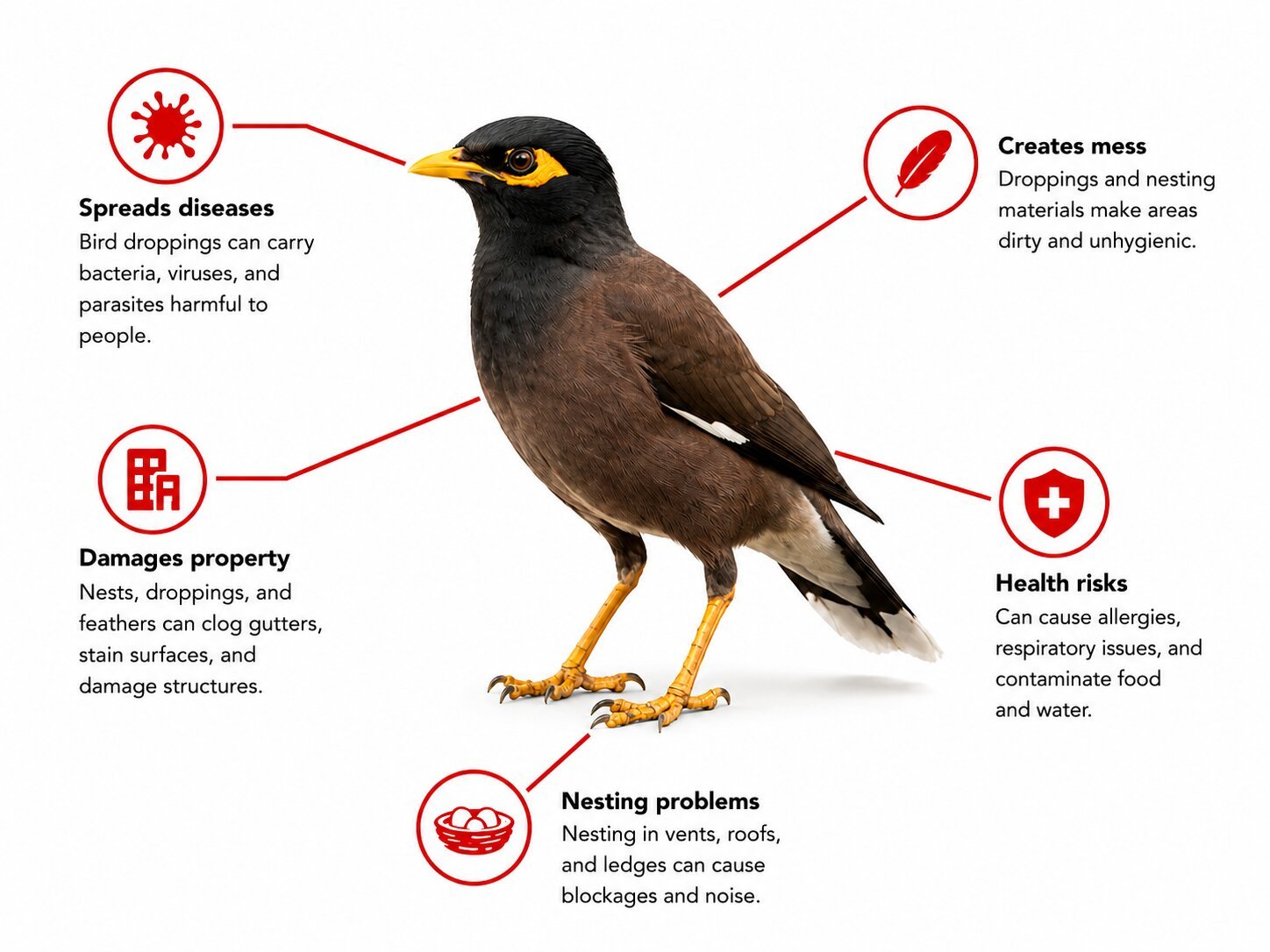
The chemical composition of bird droppings can spoil the paint surface of a car, damage an engineering structure, stain façades, affect ledges, and create difficult cleaning problems on external building surfaces.
Birds can destroy food stocks in warehouses and granaries, damage goods in supermarkets, violate the tightness of packaging, and contaminate products with droppings, feathers, and insect parasites carried on their bodies.
Birds may carry dangerous diseases such as chlamydia, hepatitis, tuberculosis, bird flu, salmonellosis, and others. Their appearance in work areas can harm the sanitary situation of enterprises.
Many birds quickly adapt to the environment. They may recognize potential danger, avoid traps, remember people or places they associate with risk, and return to safe roosting or feeding areas.
Birds are easiest to control when they are not highly motivated to stay. Preventing open food storage, food waste, exposed products, and attractive feeding conditions reduces the chance of repeated bird activity.
People currently know 10,694 bird species that live on Earth. One popular theory says that birds originated from dinosaurs, although the exact origin is still discussed.
Seagulls can drink salt water because their glands help filter salt. This ability helps explain why some birds adapt well to coastal and urban environments.
Chickens can pretend to be dead to save their lives, while roosters have natural ear protection. When a rooster opens its mouth to crow, its ear canals close, helping protect it from very loud sound.
Avoid open product storage
Remove food waste quickly
Check ledges and openings
Improve hygiene conditions
| Area | Price |
|---|---|
| Up to 100 meters | AED 40 per meter |
| 100 to 250 meters | AED 35 per meter |
| 250 meters and above | AED 30 per meter |

The workflow is simple and documented. The whole process takes up to 40 minutes in many standard cases, depending on property size, access, height, bird activity, and the selected control method.
After you fill out the request form, our manager contacts you to clarify the details.
Our specialists arrive strictly at the agreed time for the service visit.
The first technical step is to inspect the object, bird activity, and risk points.
Then we sign the service contract with you before processing begins.
Our specialists start processing using the selected bird control method.
You receive guidance about access blocking, sanitation, food sources, and prevention.
First Station provides bird control in Dubai communities for apartments, villas, restaurants, cafés, retail shops, hotels, schools, clinics, offices, warehouses, yards, food businesses, rooftops, balconies, ledges, and commercial properties.
This section is about how the service is managed: documentation, privacy, payment, technical methods, and customer confidence.
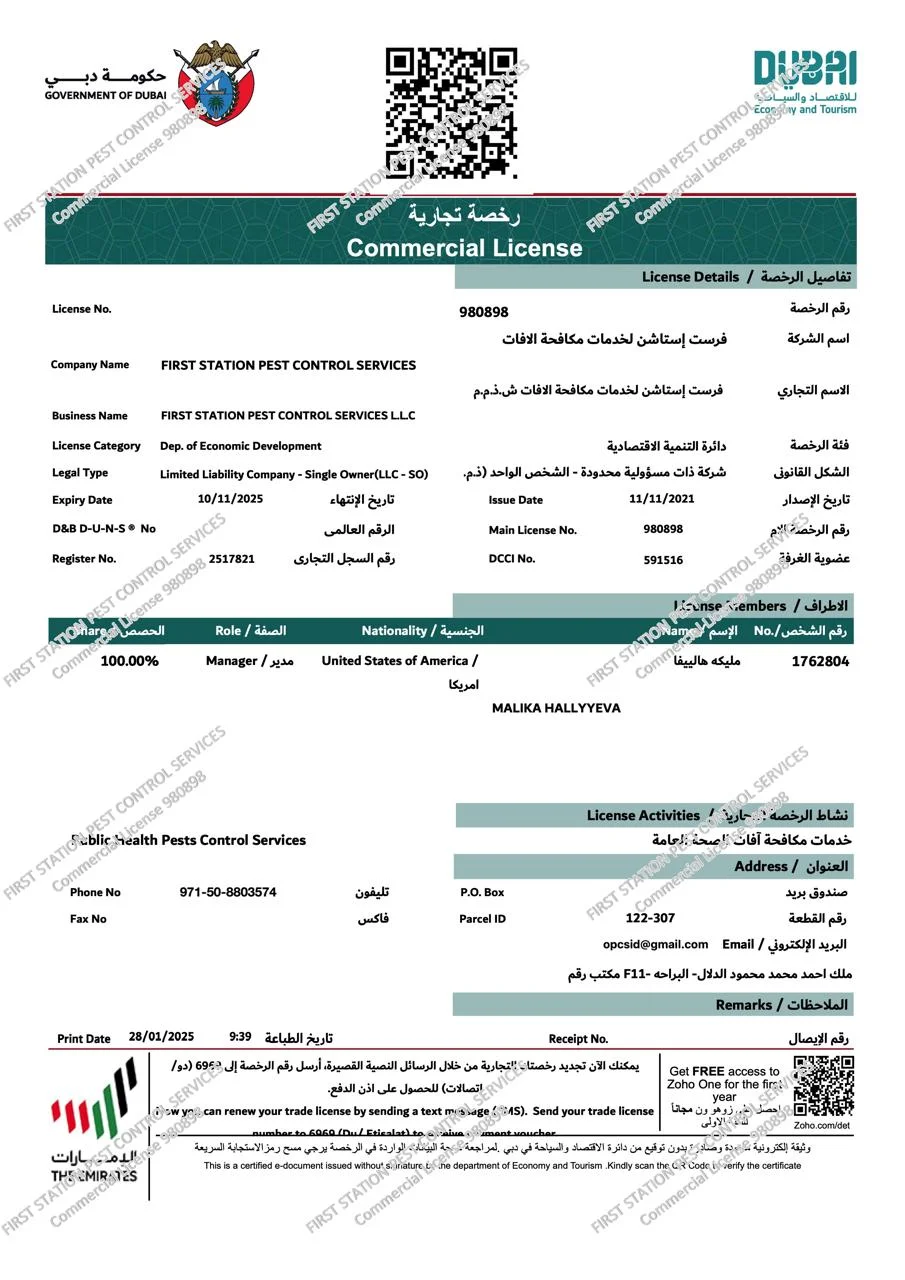
We operate with a professional license in Dubai and Municipality approval, giving customers confidence before the service starts.
Our team respects privacy. The visit is handled professionally so neighbors do not need to worry about your pest control service.
Customers can pay by card or cash, and business clients can request a service contract when regular bird control is needed.
Bird control is a professional service used to reduce unwanted bird presence, roosting, nesting, droppings, product contamination, and access to protected areas such as balconies, rooftops, warehouses, food facilities, façades, and ledges.
Many birds adapt quickly to their environment. They can recognize danger, avoid traps, remember risk, and return to comfortable feeding or nesting areas, so bird control often requires a systematic appbird.
No. Unlike many pest treatments, bird control mainly focuses on deterrence, exclusion, blocking entry points, reducing motivation to stay, and creating uncomfortable conditions in unwanted areas.
Bird droppings can damage paint and engineering structures. Birds may also contaminate food stocks, goods, packaging, warehouses, supermarkets, and working areas with droppings, feathers, and parasites.
Yes. We provide professional pest control services for restaurants and cafés, retail shops and shopping malls, hotels, schools and universities, hospitals and clinics, offices, buildings, industrial facilities, yachts, boats, yards, and warehouses.
Yes. If you need yearly pest control contracts, please fill out the inquiry form on the website or call us. Our manager will clarify your site details and recommend a suitable arrangement.
Our manager contacts you after the request form, specialists arrive at the agreed time, inspect the object, sign the service contract, begin processing, and provide final prevention guidance. The process takes up to 40 minutes in many standard cases.
We provide bird control across Dubai, including Dubai Marina, JVC, JLT, Downtown Dubai, Business Bay, Al Barsha, Palm Jumeirah, Deira, Bur Dubai, and many other communities.